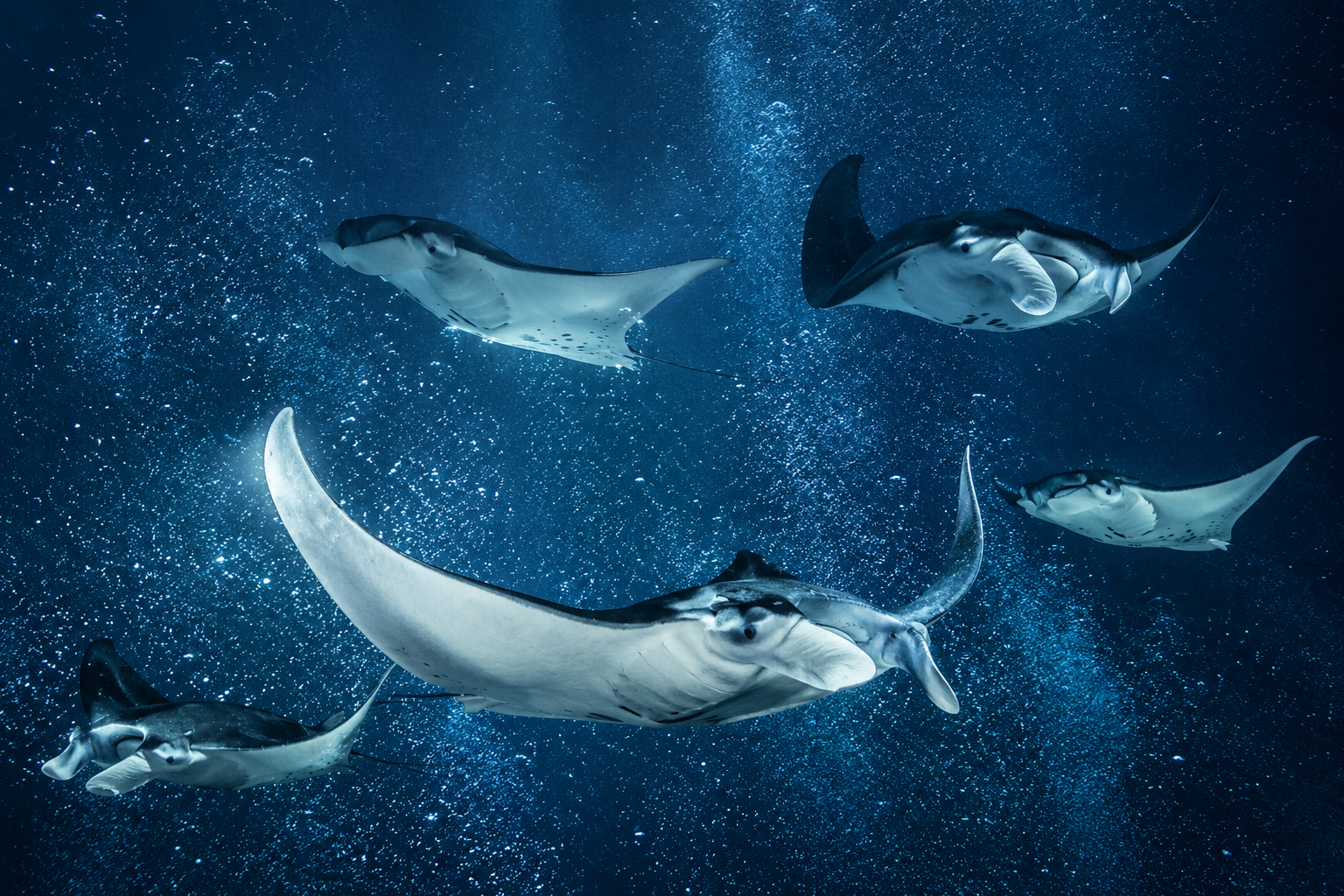
There are plenty of memorable things you can do on the Big Island, but floating in the Pacific after dark while enormous manta rays glide just inches beneath you is in a category all its own.
At first, it can sound a little intimidating. You are getting into the ocean at night, after all. Then the underwater lights come on, the water begins glowing below you, and suddenly a manta ray appears. It may sweep underneath you, turn gracefully, then come back again with its enormous mouth open as it feeds.
It is beautiful, somewhat surreal, and one of those Big Island experiences people tend to talk about long after their vacation is over.
If a night manta ray encounter is on your Hawaiʻi Island wish list, here is what you should know before you go.
Why Do the Manta Rays Come Out at Night?
The manta rays are not actually coming out just because it is dark. They are coming for dinner.
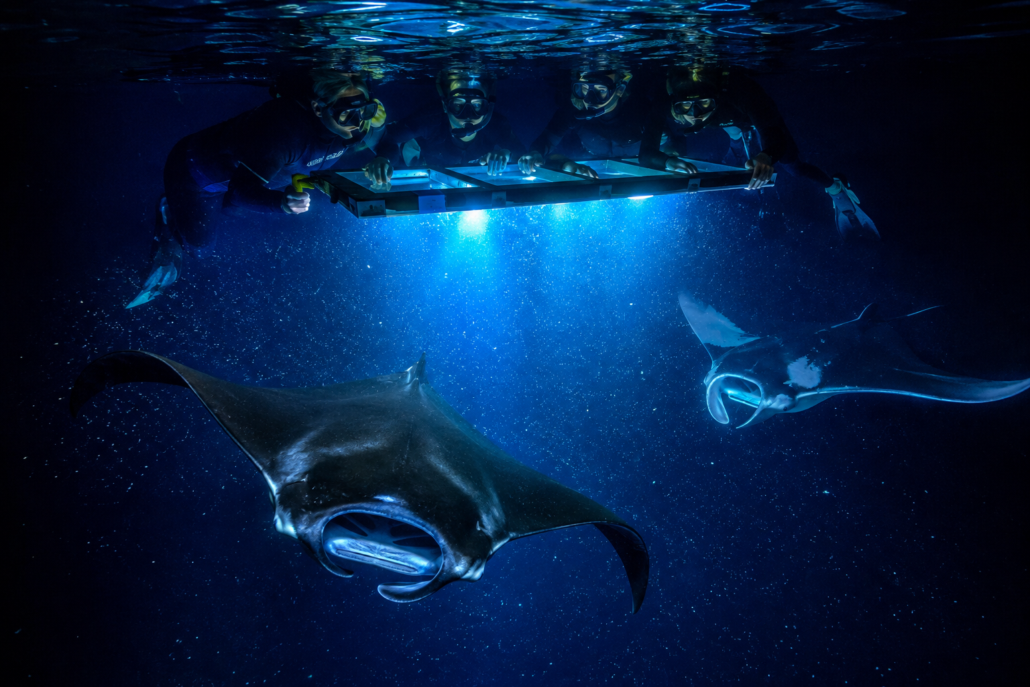
Tour operators use powerful underwater lights that attract plankton. Plankton is one of the manta rays’ primary food sources, so the mantas gather around these illuminated areas and feed. Snorkelers typically remain near the surface around a specially designed light board while the manta rays swim beneath them.
And when we say beneath you, we mean very close.
You may see a manta perform graceful loops and turns as it collects plankton. Their size can be startling at first. Reef manta rays seen along the Kona Coast can have wingspans exceeding 15 feet, yet they do not have the stingers or barbs associated with stingrays.
Once you watch one moving through the water, “gentle giant” makes perfect sense.
Where Can You See Manta Rays on the Big Island?
West Hawaiʻi is famous for nighttime manta encounters, with three well-known viewing areas along the coast.
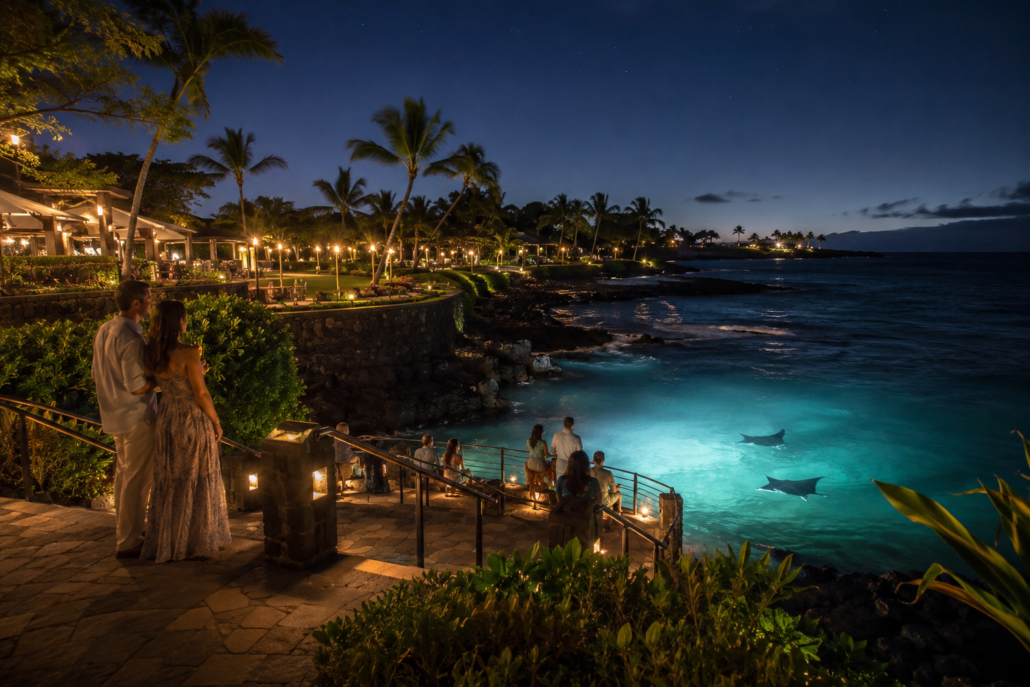
Manta Village at Keauhou Bay is one of the most established locations. It sits offshore near OUTRIGGER Kona Resort & Spa. The resort itself overlooks waters where mantas regularly feed at night, and guests in some oceanfront rooms may even be able to see activity in the viewing area. OUTRIGGER also offers educational manta programming through its Manta Center.
For an in-water experience here, book a guided manta snorkel excursion. Several operators leave Keauhou Bay, making the boat ride to the viewing site relatively short.
Manta Heaven, also known during the daytime as Garden Eel Cove, is another famous location. It sits offshore near the Kona International Airport area and is accessible by boat. The site has been used for organized manta encounters for decades and is particularly well known among divers.
Then there is Manta Point at Kaunaʻoa Bay, directly in front of the legendary Mauna Kea Beach Hotel on the Kohala Coast.
This one is especially interesting if you are staying along the Kohala Coast. Guests staying at Mauna Kea Resort, along with people dining in the hotel’s Manta restaurant, can walk to Manta Ray Point and watch the rays feeding in the illuminated water. The resort also currently offers a guided Manta Ray Moonlight Swim with manta researchers.
It is a wonderful option if getting on a boat at night does not appeal to you.
Yes, You Should Go With a Professional Tour
For an actual night snorkel encounter, we do not recommend trying it independently.
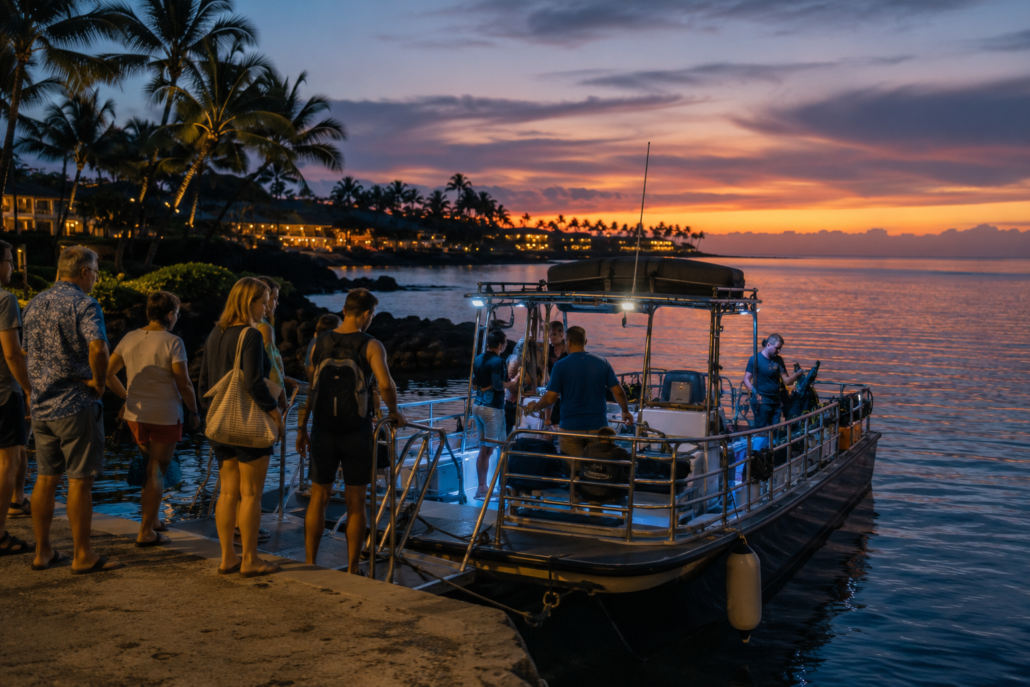
You are entering the ocean after dark, and two of the major viewing sites require boat access. A professional tour provides flotation equipment, lights, snorkel gear, wetsuits on many excursions, safety briefings, and experienced guides who understand both the ocean conditions and manta behavior.
Just as important, a good guide will teach you how to enjoy the experience without disturbing the animals.
There are quite a few established manta operators on the west side of the Big Island. Current options include Sea Paradise, Fair Wind Cruises aboard Hula Kai, Big Island Divers, Manta Adventures, and Kona Snorkel Trips. For the Mauna Kea experience, Manta Ray Advocates operates the resort’s guided moonlight swim.
Each company has different requirements concerning swimming ability, minimum age, physical limitations, and previous snorkeling experience, so read the requirements carefully before booking.
What Actually Happens on a Manta Ray Night Snorkel?
Most experiences begin around sunset or after dark.
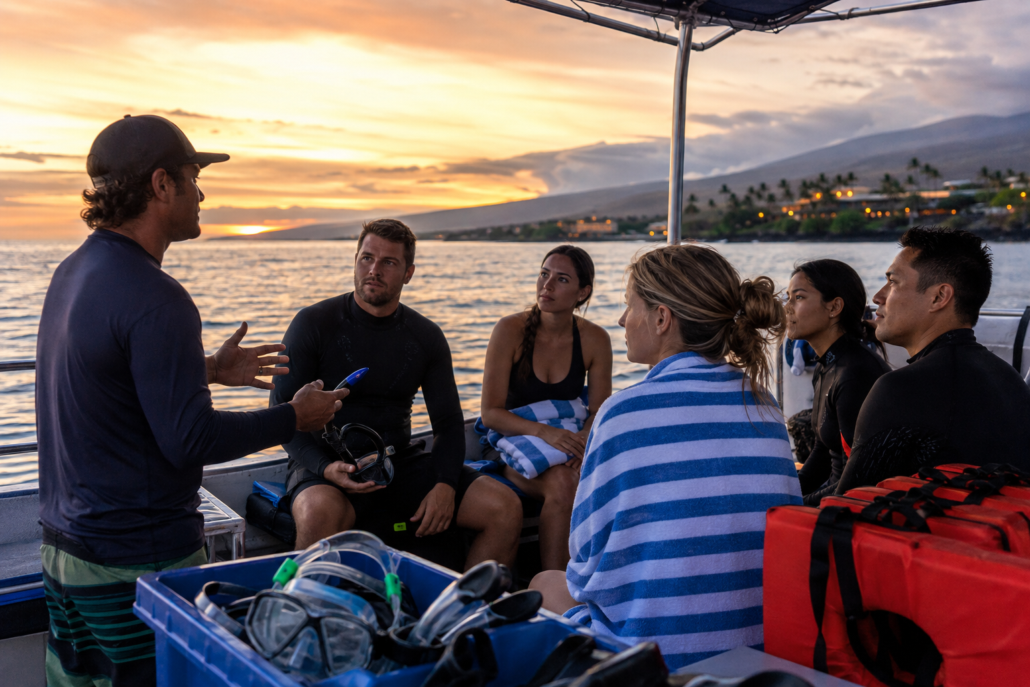
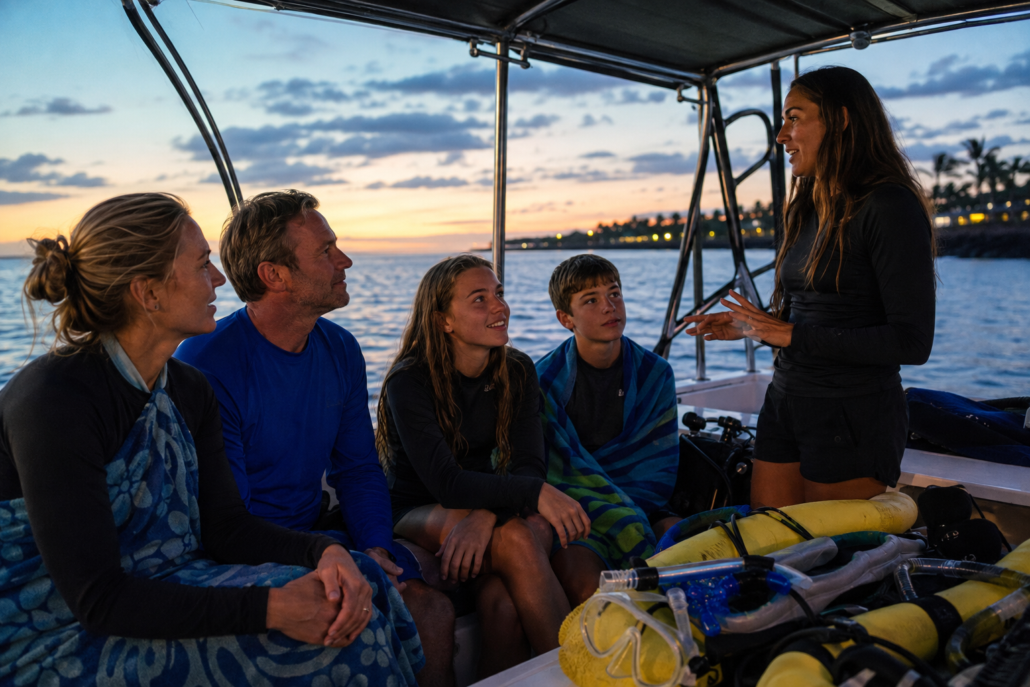
After checking in, you will receive your equipment and a safety briefing. Your guides will explain how the manta encounter works and how you should position yourself in the water.
Once you reach the viewing site, snorkelers generally enter the water and hold onto a floating light board. The lights shine downward, attracting plankton and creating an illuminated viewing area.
Then you wait.
Sometimes the mantas arrive quickly. Sometimes patience is required. These are wild animals, and no responsible tour can control what they decide to do on a specific evening.
When they do appear, it can be spectacular.
The manta rays may glide underneath the group again and again, feeding on the plankton concentrated around the lights. Some excursions allow roughly 30 to 45 minutes of water time, though the exact experience varies by operator and ocean conditions.
How Should You Prepare?
You really do not need much, but a little planning can make the evening much more comfortable.
- Wear your swimsuit under comfortable clothes.
- Bring a towel and a warm, dry layer for the boat ride afterward.
- If you are prone to seasickness, take whatever precautions normally work for you before departure.
- Eat lightly before the tour rather than having a very heavy dinner.
- Bring a waterproof camera or GoPro if you have one, but turn off the flash and follow your guide’s photography instructions.
- Ask the company what equipment is included. Many provide wetsuits, masks, snorkels, and flotation devices.
- Book your manta excursion early in your vacation when possible. If weather causes a cancellation or the mantas decide not to visit that evening, you may have another opportunity later in your stay.
One more thing: do not touch the manta rays.
Even if one swims close enough that you feel you could hold out your hand and touch it, resist the temptation; physical contact can damage the protective mucus coating on a manta’s skin. Responsible manta encounters are based on passive observation, allowing the animals to decide how close they want to come.
Is It Good for Families?
It certainly can be, especially for older children who are comfortable snorkeling and swimming in the ocean.
Keep in mind that individual tour companies have different age and swimming requirements. Some allow non-swimming family members to ride along and watch, while others are specifically designed for confident snorkelers. Sea Paradise and Manta Adventures, for example, currently offer ride-along options on certain manta excursions.
If someone in your family is nervous about entering the ocean after dark, watching the mantas at Mauna Kea Beach Hotel or OUTRIGGER Kona Resort & Spa can be a nice introduction.
Put This One on Your Big Island List
We love activities that let visitors experience something really unique about Hawaiʻi Island, and a night with the manta rays certainly qualifies.
There is something almost peaceful about watching such enormous animals move so elegantly through the dark ocean. One moment you are staring into blue light and plankton. The next, an enormous manta appears beneath you and seems almost to fly through the water.
And somehow, watching them on a screen does not compare.
If you are staying with Kohala Coast Properties, consider adding a manta ray evening to your vacation plans. If you are staying in Waikoloa Beach Resort or along the Kohala Coast, Manta Point at Mauna Kea is worth exploring. For the classic boat-based night snorkel experience, you will find numerous tours operating along the Kona and Keauhou coastline.
Book ahead, choose a responsible tour company, listen to your guides, respect these incredible animals, and prepare yourself for one of those Big Island nights you may never forget.